SynthID Detector: how to check AI images (and why removers fail)
Google's SynthID Detector is open to everyone. How to check a file, what OpenAI and Anthropic mark, why a $1 watermark remover isn't a real fix, and what the EU AI Act requires.
~6 min read
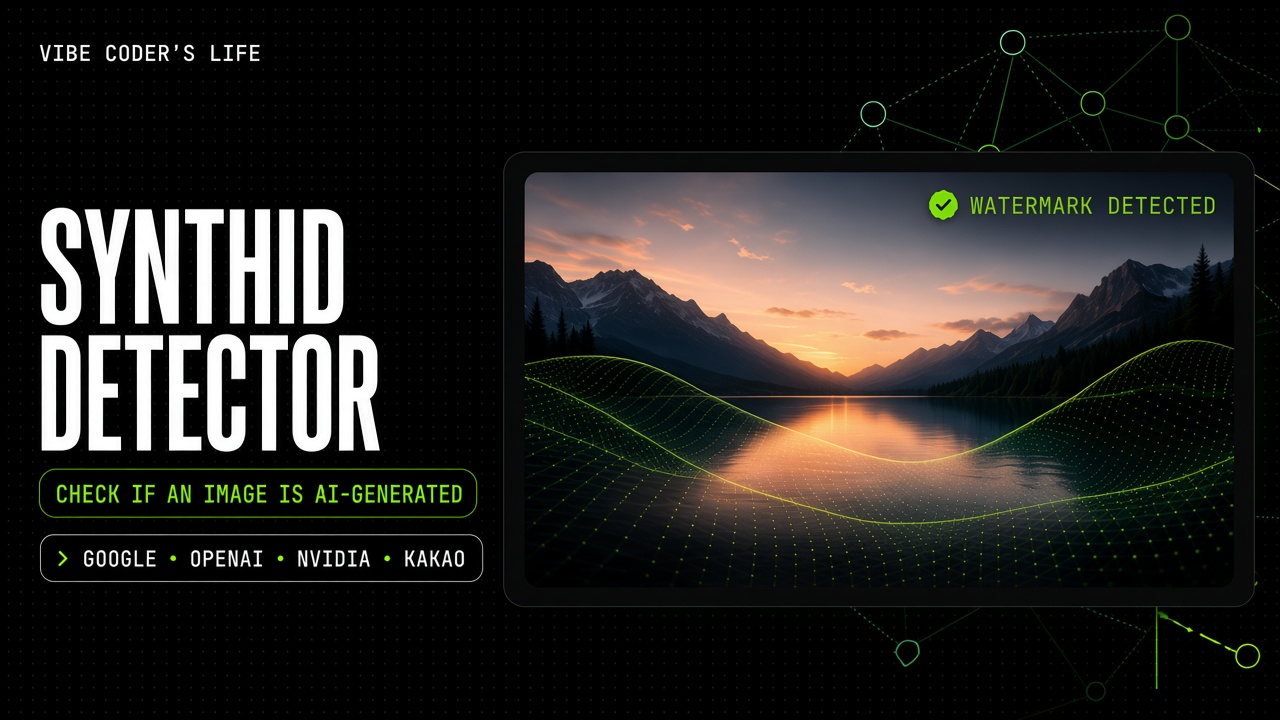
Is this image AI generated? Start with SynthID Detector
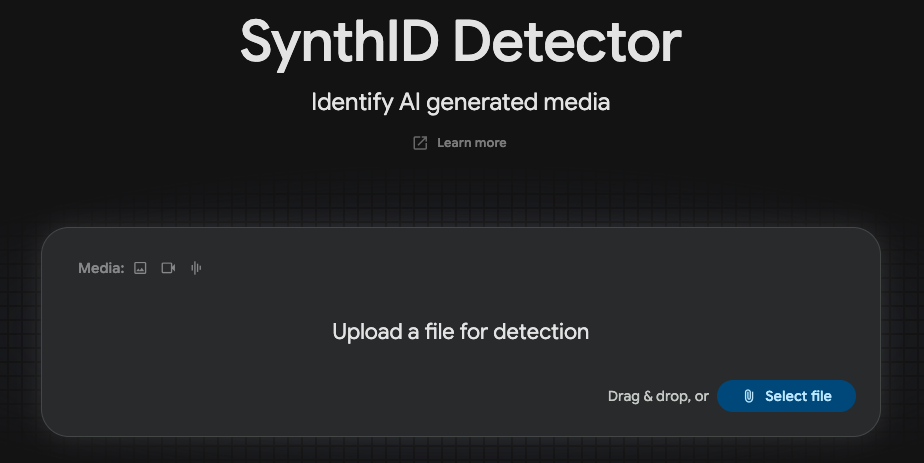
Google DeepMind opened the SynthID Detector to everyone, globally, in English, and that includes us in Hungary and the rest of the EU. You upload a file and it tells you whether it carries the invisible SynthID watermark. Google says SynthID has marked over 180 billion images and videos and 240,000 years of audio, and the checks built into Search, Gemini and Chrome handle over 1 million requests a day.
The detector recognises media from Google, OpenAI, NVIDIA and Kakao, and Apple is announced as coming. Two results matter:
- Detected: the file was likely made or edited by a SynthID-enabled model. For video and audio it shows which parts.
- Not detected: no confident signal. It might come from another model, from before SynthID, or it might be heavily edited.
OpenAI and Anthropic watermarks: what's official
OpenAI made SynthID part of its own stack. Since 19 May 2026, images from ChatGPT, Codex and the API carry both C2PA Content Credentials (signed metadata) and a SynthID watermark. SynthID was added to audio on 31 July. On 5 Oct 2026 OpenAI announced an invisible textGrain watermark for eligible ChatGPT and Codex text in the EU, to comply with the AI Act. API customers worldwide can opt in, but it's off by default outside the EU. Its public checker is openai.com/verify for images and audio. The text detector is limited to approved researchers.
Anthropic has signed the EU Code of Practice on AI-generated content. Claude models launched in the EU from 2 Aug 2026 watermark their text, and files Claude generates, such as PNG or JPEG, get C2PA Content Credentials. Anthropic applies this worldwide across the API, Claude, Claude Code and its cloud partners, because it says it can't yet scope it by region. Older models are being added. Detecting the text watermark is a private preview for eligible organisations such as regulators, media and researchers.
| Provider | What it marks | Method | Public detector? | EU status |
|---|---|---|---|---|
| Images, video, audio, text | SynthID watermark | Yes: synthid.com (images, video, audio) | Open to everyone, including the EU | |
| OpenAI | Images, audio, EU text | C2PA + SynthID; textGrain for text | Yes for images and audio (openai.com/verify); text by application | Text watermark on by default in the EU only |
| Anthropic | Text, generated files | Text watermark; C2PA on files | Text detection in private preview | Signed the EU Code; marking applied worldwide |
Swipe horizontally on mobile to see every column.
AI watermark remover tools: why a $1 "remove SynthID" fix isn't legit
“SynthID remover” and “AI watermark remover” show up in autocomplete every day, and cheap sites promise to clean a file for a dollar. They aren't legitimate, and here's why:
- No provider has published anything a remover could rely on. Google, OpenAI and Anthropic document how to check content, not how their image and audio marks could be undone, and the detectors are run by the providers themselves. A remover can't prove it worked.
- Your file pays the price. SynthID lives in the pixels, so “removal” means degrading or redrawing the image, with no guarantee.
- Labelling still applies. Stripping a mark doesn't remove your own duty to label a deepfake under the AI Act.
What is the EU AI Act? Article 50 in plain words
The EU AI Act (Regulation (EU) 2024/1689) is the EU's AI law. It entered into force on 1 Aug 2024 and applies in stages. Because it's a regulation, it applies directly in Hungary and every other member state, with no national law needed. Article 50 covers transparency:
- Providers, the companies that build AI tools, must mark generated text, images, audio and video in a machine-readable, detectable way, and tell you when you're talking to an AI.
- Deployers, meaning businesses and creators using AI professionally, must clearly label deepfakes, and AI text published on matters of public interest without human editorial review.
- Dates: Article 50 has applied since 2 Aug 2026. AI systems already on the market before then have until 2 Dec 2026 for the marking duty only.
Bottom line for builders in Hungary and the rest of the EU: the mark is usually your provider's job; labelling a deepfake you publish is yours.
What it means for vibe coders
- Building with an AI API in the EU? Your provider handles the machine-readable mark. Labelling a deepfake you publish is your job.
- Need to verify media in your app? OpenAI has a Content Provenance API for images and audio, and Google's SynthID Text is open source.
- Images on social? See how I handled Meta using your images and what Muse Wonder does.
Looking for a checker of a different kind? My free OpenAI Ads Readiness Checker doesn't detect watermarks — it checks whether your site is ready for ChatGPT ads. Here's how I built it with Codex, and the rest of my 2026 vibe coding stack.
FAQ
Is this image AI generated? How can I check?
Upload it to Google's SynthID Detector at synthid.com, which spots SynthID marks from Google, OpenAI, NVIDIA and Kakao. For OpenAI images and audio you can also use openai.com/verify. Both only find their own partners' signals, so “not detected” doesn't prove a person made it.
Can you remove SynthID from an image?
Not reliably, and I don't recommend trying. SynthID is woven into the pixels, not stored as metadata, and Google says it survives filters, colour changes and compression. No provider has published anything a removal tool could build on, and the detectors are run by the providers themselves, so no remover can prove it worked.
Are AI watermark remover tools legit?
No. Cheap “$1 watermark remover” sites can't verify their own claims, they usually degrade your file, and removing a mark never removes your own duty to label a deepfake under the EU AI Act.
Does ChatGPT or Claude watermark text?
Yes, in different ways. OpenAI adds an invisible textGrain watermark to eligible ChatGPT and Codex text in the EU, and API customers anywhere can opt in. Anthropic says Claude models launched in the EU from 2 Aug 2026 watermark their text worldwide. Text detection for both is limited to approved organisations for now.
What does the EU AI Act Article 50 require?
From 2 Aug 2026, providers of generative AI must mark output in a machine-readable, detectable way, and anyone using AI professionally must clearly label deepfakes. Systems already on the market before that date have until 2 Dec 2026 for the marking part. It's an EU regulation, so it applies directly in Hungary too.
Is SynthID Detector free and available in the EU and Hungary?
Yes. Google's SynthID Detector is open to everyone, globally, in English. That includes Hungary and the rest of the EU. You upload a file at synthid.com — there is no paid tier for the public detector.
I verify every launch against the provider's own pages. Subscribe to the VCL newsletter for the Tuesday and Friday guides, and grab my most-read free guide: free AI API keys for vibe coding in 2026.
Sources: SynthID Detector (7 Oct 2026); EU Code of Practice on transparency of AI-generated content. Checked 27 Oct 2026.
Disclosure: no paid placement and no referral links in this post. The OpenAI Ads Readiness Checker is my own tool. The Playbook is my own product.
Questions? Get in touch — or subscribe for the next AI news post.